
Drone laser inspection at Sebei Gas Field
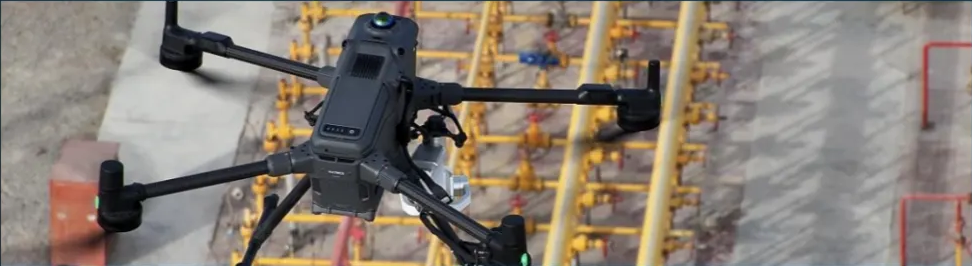
Operational monitoring at Sebei Gas Field collected methane data from well sites and pipelines and transmitted it to the ground command centre in real time.
The challenge
Widely dispersed gas wells and extensive pipelines at Sebei Gas Field create challenges for inspection coverage, response time, and labour costs.
What AIRINS deployed
The drone flies autonomously along preset routes, collecting and transmitting methane data in real time. Threshold exceedances trigger alarms and location marking.
What happened
The official-account article reports two concealed leak hazards, a more than fivefold improvement in inspection efficiency, and a reduction in labour costs of over 60%.
Why it mattered
Personnel used the alarms to reach and address the affected locations, connecting aerial inspection with the response on the ground.
A drone inspection system equipped with laser methane monitoring equipment recently completed an operational monitoring mission at PetroChina's Sebei Gas Field. It precisely identified multiple methane leak locations and generated real-time alarms, allowing potential safety hazards to be addressed promptly and substantially improving inspection efficiency and safety management at the gas field. As an important natural gas production base, Sebei Gas Field has widely dispersed gas wells and extensive pipelines. Conventional manual inspections and fixed monitoring systems face gaps in coverage, slow response times, and high labour costs, making it difficult to meet the field's needs for detailed safety management. To address these challenges, the gas field introduced drone-based laser methane monitoring technology to build an integrated aerial and ground inspection system. The laser methane monitoring equipment carried by the drone uses laser absorption spectroscopy to detect methane concentrations in the air rapidly and accurately, with ppm-level sensitivity. During inspections, the drone flies autonomously along preset routes, covering remote well sites and areas of complex terrain that are difficult to reach on foot. It collects methane concentration data in real time and simultaneously transmits it to the ground command centre. When readings exceed the safety threshold, the system immediately triggers audible and visual alarms and marks the precise geographic location of the leak, giving operations and maintenance personnel clear guidance for responding. Leak hazards successfully identified In this deployment, the drone inspection system completed comprehensive monitoring of several square kilometres of the gas field within a short time and identified two concealed methane leak hazards. Operations and maintenance personnel quickly went to the locations indicated by the alarms and addressed the hazards before they could develop further. Compared with conventional inspection methods, the article reports a more than fivefold improvement in inspection efficiency and a reduction in labour costs of over 60%. It also describes the monitoring as providing all-weather coverage without blind spots and with high precision, overcoming shortcomings of conventional inspections. Efficiency and cost benefits Faster detection: the drone-based laser methane monitoring system can scan Sebei Gas Field rapidly, with detection efficiency far exceeding manual inspection. Lower labour requirements: inspections that previously required several people can now be performed by one operator using the system, substantially reducing labour costs. Lower maintenance expenditure: the system's stability reduces the frequency and cost of equipment maintenance at Sebei Gas Field. This deployment of drone-based laser methane monitoring equipment at Sebei Gas Field demonstrates the use of intelligent manufacturing technology to support safe energy production. PetroChina's Sebei Gas Field plans to expand the adoption and application of intelligent inspection technology and continue improving its combined system of personnel-based, technical, and intelligent safeguards to support stable, safe, and efficient production over the long term.
Interested?
Discuss your application
Tell us about your application, operating conditions and the results you need.