
Robot-assisted close-proximity methane checks
Position a probe near components without sending an operator into difficult areas.
The challenge
Position a probe near components without sending an operator into difficult areas.
What AIRINS deployed
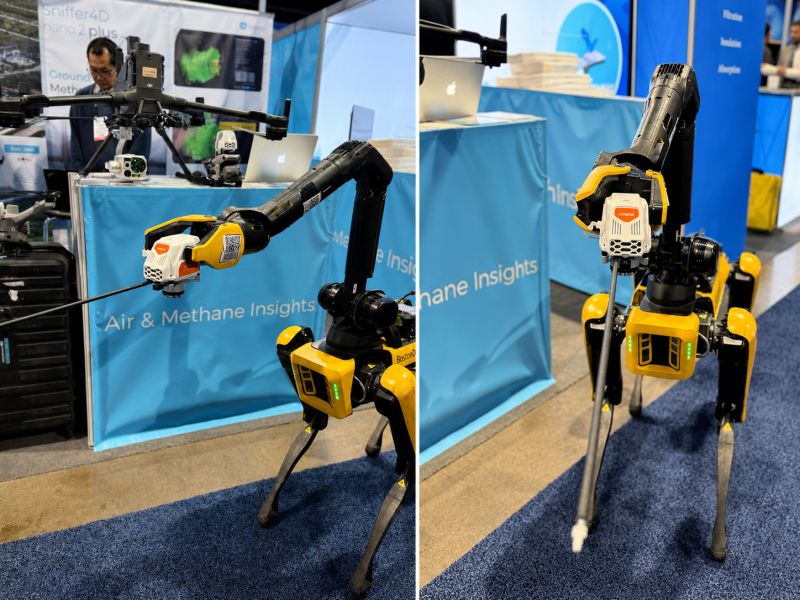
The photographs show Spot holding a methane sensor with its arm.
What happened
The post proposes remotely operated inspection and explains that calibration, analyser validation and procedure remain essential to any Method 21-style workflow.
Why it mattered
This is a proposed inspection approach, not evidence of certification or demonstrated regulatory compliance.
In this photos, a Boston Dynamics Spot uses its robotic arm to hold an AIRINS Sniffer4D methane sensing system. The immediate value is not full autonomy. It is something more practical: allowing a trained human operator to remotely control the robot and perform close-proximity methane checks around components, especially in areas that are repetitive, difficult to access, or less safe for people. For USEPA Method 21-style LDAR, this distinction matters. The robot does not change the measurement principle. It can simply become the probe-positioning platform. If the complete analyser/probe configuration is properly calibrated and validated, and if the inspection procedure follows Method 21 requirements — then robot-assisted inspection becomes a very realistic M-21 compliant path. In industrial environments, remote human operation itself can already create significant value: • better safety • more repeatable inspection execution • stronger digital audit trails • less dependence on difficult field access • the ability to support sites remotely with expert operators #MethaneEmissions #LDAR #USEPA #Method21 #EnvironmentalCompliance #FugitiveEmissions #RemoteInspection #IndustrialSafety #Robotics #BostonDynamics #OilAndGas #MethaneDetection #AIRINS #Sniffer4D
Interested?
Discuss your application
Tell us about your application, operating conditions and the results you need.